Pickleball Court Dimensions: A Complete Breakdown
Knowing the exact measurements of the pickleball court can enhance your performance and tailor your strategy.
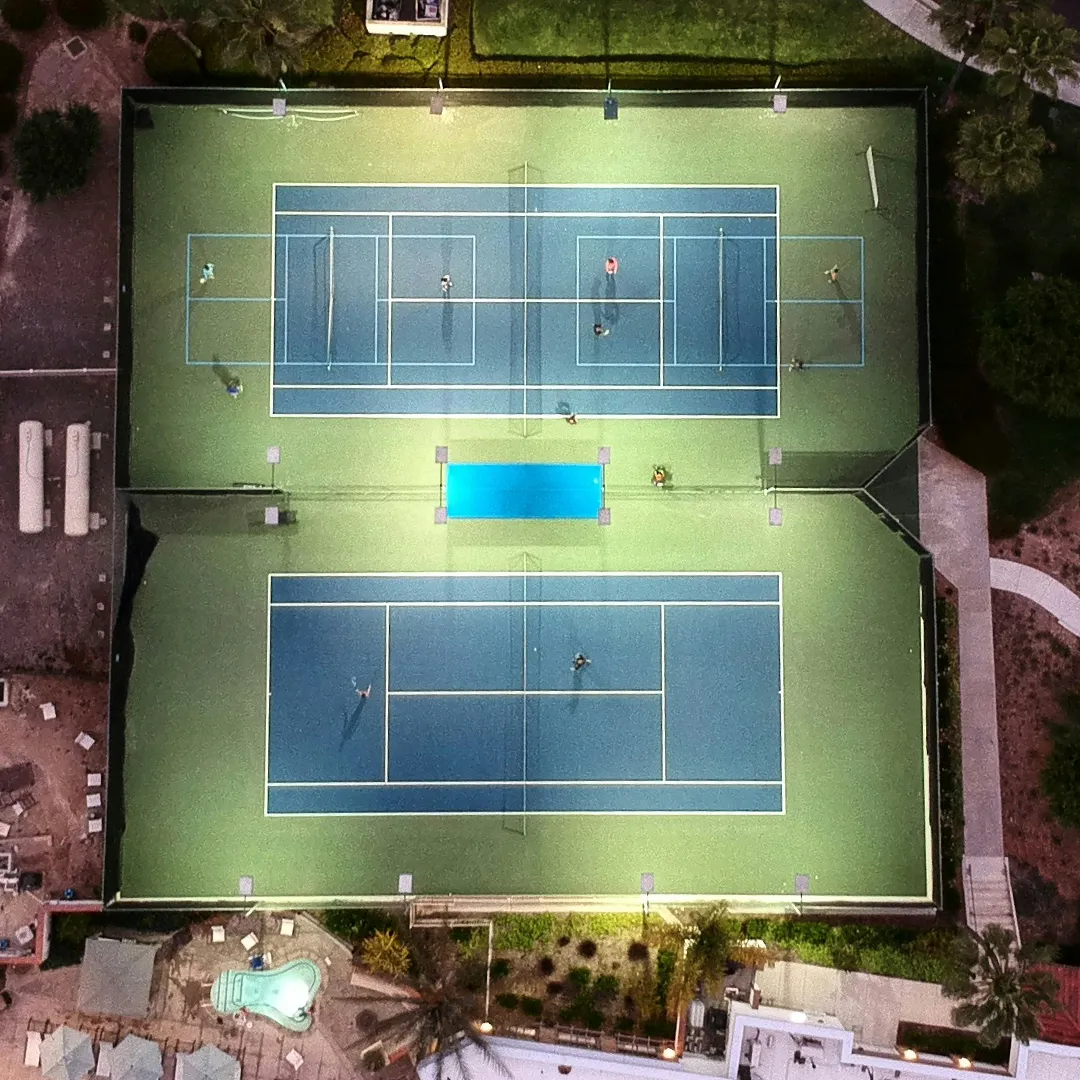
Pickleball court size is a key factor in understanding how the game is played and tailoring a strategy. Understanding the breakdown of these dimensions, including areas like the non-volley zone (or kitchen), baselines, and service courts, is crucial for advancing in the game and ensuring fair play.
In this guide, we’ll explain the specifics of a pickleball court, offering a clear picture of how its layout impacts gameplay.
Pickleball Court Size
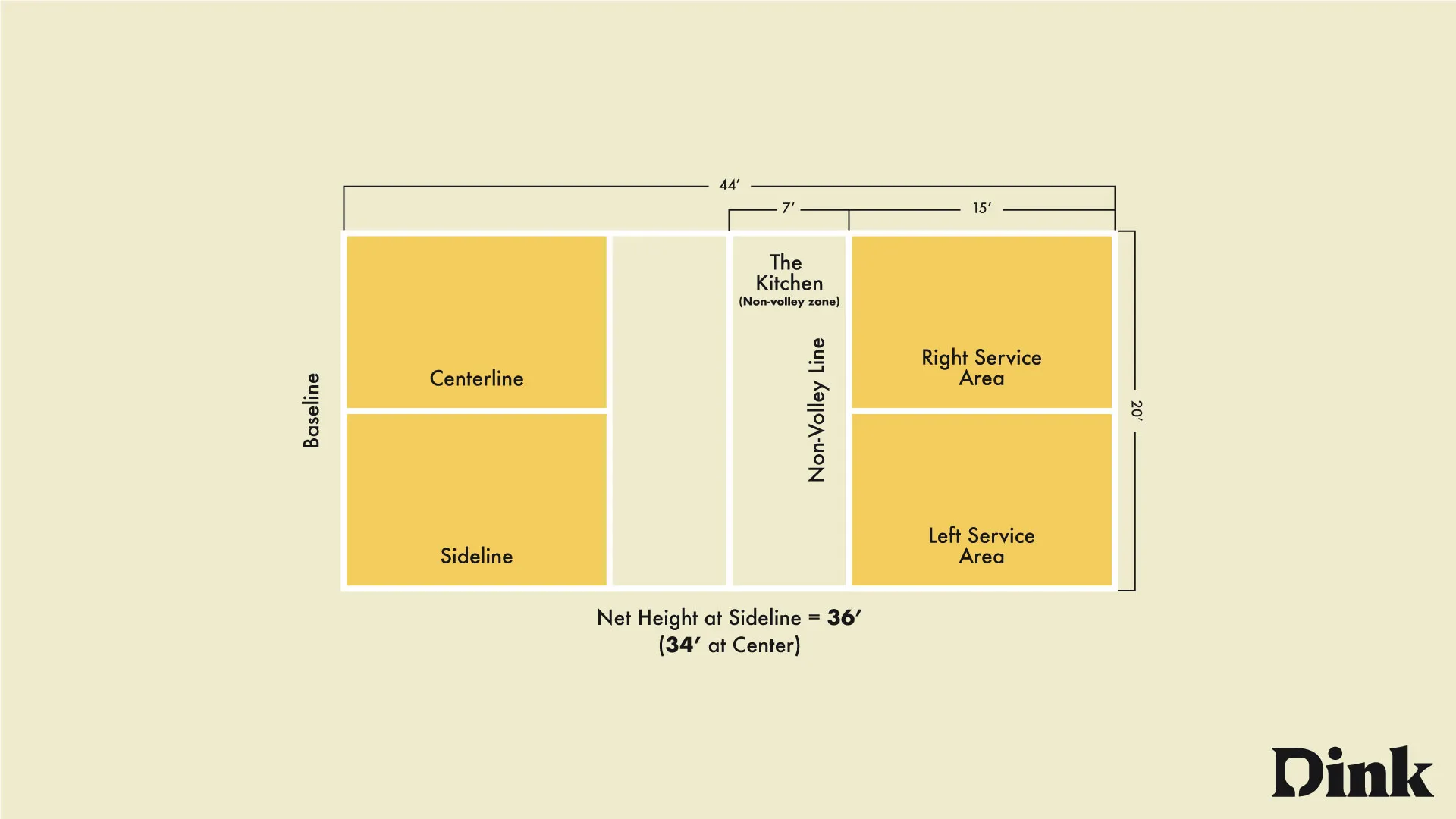
The standard pickleball court size is 20 feet wide by 44 feet long. Pickleball has one court size, unlike other racket sports like tennis, where singles and doubles courts have different dimensions. Its size is similar to a badminton court, which also measures 20x44 feet.
For those who play or watch tennis, a pickleball court is roughly a quarter of the size of a tennis court, which measures 36 feet by 78 feet. The smaller dimensions contribute to the fast-paced nature of pickleball, keeping players closer to the action and requiring less running than sports like tennis. This compact size also allows for more pickleball courts to be placed in a single area, which is especially handy for settings where space may be limited.
The consistent 20x44-foot dimensions ensure that the game can be played both indoors and outdoors without requiring any adjustments to court size. This makes pickleball versatile and accessible in various environments.
Pickleball Net Height and Dimensions
The standard pickleball net is 36 inches high at the sidelines and dips slightly to 34 inches at the center. This small height difference plays an important role in pickleball gameplay. The lower center helps reduce the difficulty of low volleys and makes it easier for players to hit the ball over the net, keeping rallies fast-paced. The higher sides ensure that shots hit toward the edges of the court still require precision.
The net's width is typically 22 feet, which slightly overlaps the 20-foot-wide court on either side. This overlap is important because it allows for secure net placement and prevents any gaps between the net and the sidelines. The extra width also ensures that the net remains taut, which helps keep gameplay consistent, particularly in outdoor environments where wind may affect the ball's trajectory.
This specific net height and width are standard in both recreational and tournament play.

Explore and Experiment With Paddle Options to Find the Perfect Fit
Starting from $79.99/each
Detailed Breakdown of Pickleball Court Areas
Understanding the different areas of a pickleball court is important for players of all levels. Each section of the court has a unique purpose and directly impacts gameplay strategy, scoring, and player movement.
Non-Volley Zone (The Kitchen)
The non-volley zone, commonly called "the kitchen," is a 7-foot area on both sides of the net where players cannot volley the ball (hit it out of the air). This zone is critical because it prevents players from dominating the game with aggressive net play, encouraging more tactical and thoughtful gameplay.
Players can step into the kitchen only after the ball has bounced; volleying while standing in the kitchen results in a fault. This rule forces players to time their approaches carefully and balance offensive and defensive moves. The kitchen plays a major role in leveling the playing field, keeping games competitive and exciting.
Service Courts
A pickleball court is divided into two equal service courts, one on each side of the centerline. Each service court measures 10 feet wide and runs from the baseline to the non-volley zone. When serving, players must hit the ball diagonally across the court into the opponent’s service court, similar to tennis.
The division of the court into service areas helps ensure that serves are accurate and strategic, requiring players to aim precisely. Because of this, players need to control both power and placement to stay within the court boundaries.
The Baselines and Sidelines
The baselines are the lines at the back of the pickleball court, while the sidelines run along the sides, forming the boundaries of the playing area. The baselines are 44 feet long, and the sidelines are 20 feet wide. These lines are crucial for determining whether a pickleball ball is in or out of play, with any ball landing outside these boundaries considered out.
Players must remain behind the baseline while serving, and stepping on or over the line before the ball is served results in a foot fault. Understanding the importance of the baselines and sidelines helps players refine their court positioning and shot placement and avoid faults that could impact the game.
Centerline
The centerline divides the court lengthwise into two halves, from the kitchen line to the baseline. This line separates the left and right service courts, ensuring players serve in the correct area. It helps players visualize the diagonal serving rule, where serves must cross the net and land in the opposite service box.
By clearly dividing the court, the centerline helps organize gameplay and makes it easier for players to orient themselves during fast-paced rallies. It also prevents confusion about serving rules, ensuring each point starts orderly.
Meet the Expert

Mike Hardy
Hey, I’m Mike Hardy, founder of Dink. I’ve spent years learning everything there is to know about what makes a paddle play great, and I personally test every single one we make (sometimes until they break) to make sure they’re up to the challenge. So, in my articles, I want to share my knowledge with you to help you find the perfect pickleball equipment for you.