Pickleball vs. Tennis: A Detailed Comparison of Two Popular Racquet Sports
Learn what makes each sport unique and why both deserve a place in your sporting repertoire.
As racquet sports continue to captivate enthusiasts worldwide, pickleball and tennis have emerged as two of the most beloved and widely played games. Both sports offer unique experiences, blending physical activity with strategic gameplay, yet they differ significantly in various aspects.
With this article, we aim to compare pickleball and tennis, delving into their histories, rules, equipment, and the distinct physical and strategic demands they place on players.
What's the Difference Between Pickleball and Tennis
While sharing some similarities, pickleball and tennis are distinct sports with unique characteristics. The primary differences lie in court size, equipment, and gameplay.
Pickleball is played on a smaller court with paddles and a perforated plastic ball, resulting in a game that emphasizes quick reflexes and shorter, more strategic strikes.
In contrast, tennis is played on a larger court with rackets and a felt-covered ball. It requires better physical endurance and a focus on powerful serves.
Feature | Pickleball | Tennis |
Court Size | 20x44 feet | 78x27 feet (singles), 78x36 feet (doubles) |
Net Height | 34 inches at the center | 36 inches at the center |
Equipment | A paddle and a plastic ball with holes | A racket and a felt-covered rubber ball |
Scoring System | First to 11 points, win by 2 | Points, games, sets |
Gameplay Style | Quick, strategic exchanges close to the net | Powerful serves, baseline rallies |
Physical Demands | Less running, quick movements | Extensive running, full-body workout |
History and Origin of Both Sports
Pickleball was invented in 1965 by Joel Pritchard, Bill Bell, and Barney McCallum on Bainbridge Island, Washington. The game was created as a family activity to entertain their children, combining elements of badminton, tennis, and table tennis. Pickleball quickly gained popularity due to its simplicity and adaptability, eventually evolving into a competitive sport with a structured set of rules and official organizations.
On the other hand, tennis has ancient origins dating back to 12th-century France, where it was initially played with the hand instead of a racket. The game evolved significantly over the centuries, with Major Walter Wingfield developing the modern version of lawn tennis in the late 19th century. Tennis is now a famous sport, with established major tournaments like Wimbledon and the U.S. Open, solidifying its status as a prestigious global sport.
Pickleball Court vs Tennis Court Dimensions
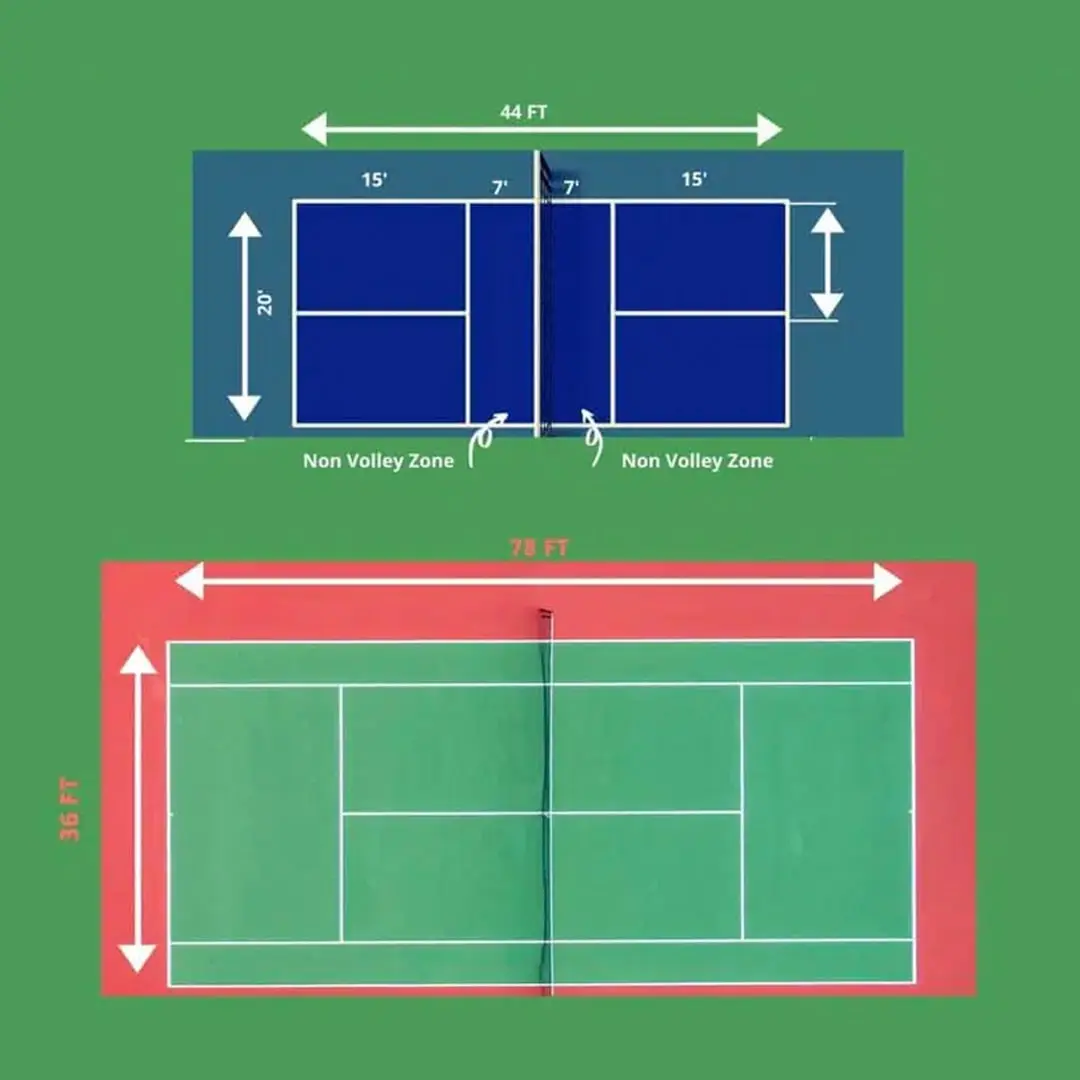
The dimensions of pickleball and tennis courts are significantly different, reflecting each sport's unique nature and gameplay. A standard pickleball court measures 20 feet wide by 44 feet long, which is considerably smaller than a tennis court. In contrast, a tennis court for singles play measures 27 feet wide by 78 feet long, expanding to 36 feet wide for doubles matches.
The net height also differs between the two courts. Pickleball nets are 36 inches at the sidelines and 34 inches in the middle, while tennis nets are 42 inches high at the posts and 36 inches in the center. This difference in net height influences the style of play, with pickleball being more about quick exchanges close to the net and tennis requiring more varied shot trajectories and greater power.
The smaller size of a pickleball court allows for faster-paced games and shorter distances for players to cover, making it a popular choice for those looking for a less physically demanding sport than tennis. On the other hand, the larger tennis court demands more running and endurance, contributing to a more intense cardiovascular workout.
The courts' surface can also vary, with both sports being played on asphalt, concrete, or specialized synthetic materials. However, tennis courts often come in clay and grass variations, significantly affecting the game's dynamics.
Pickleball and Tennis Equipment Differences
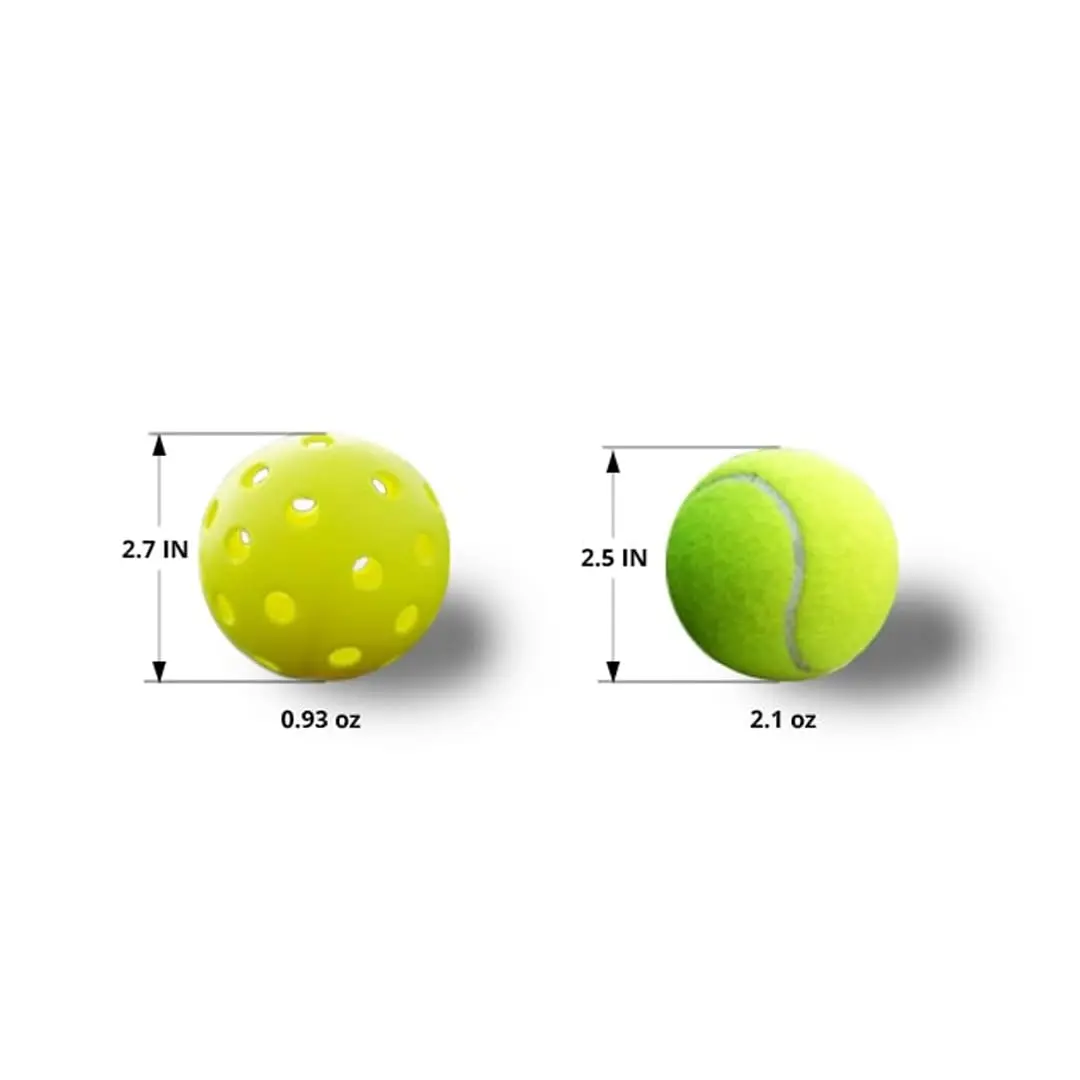
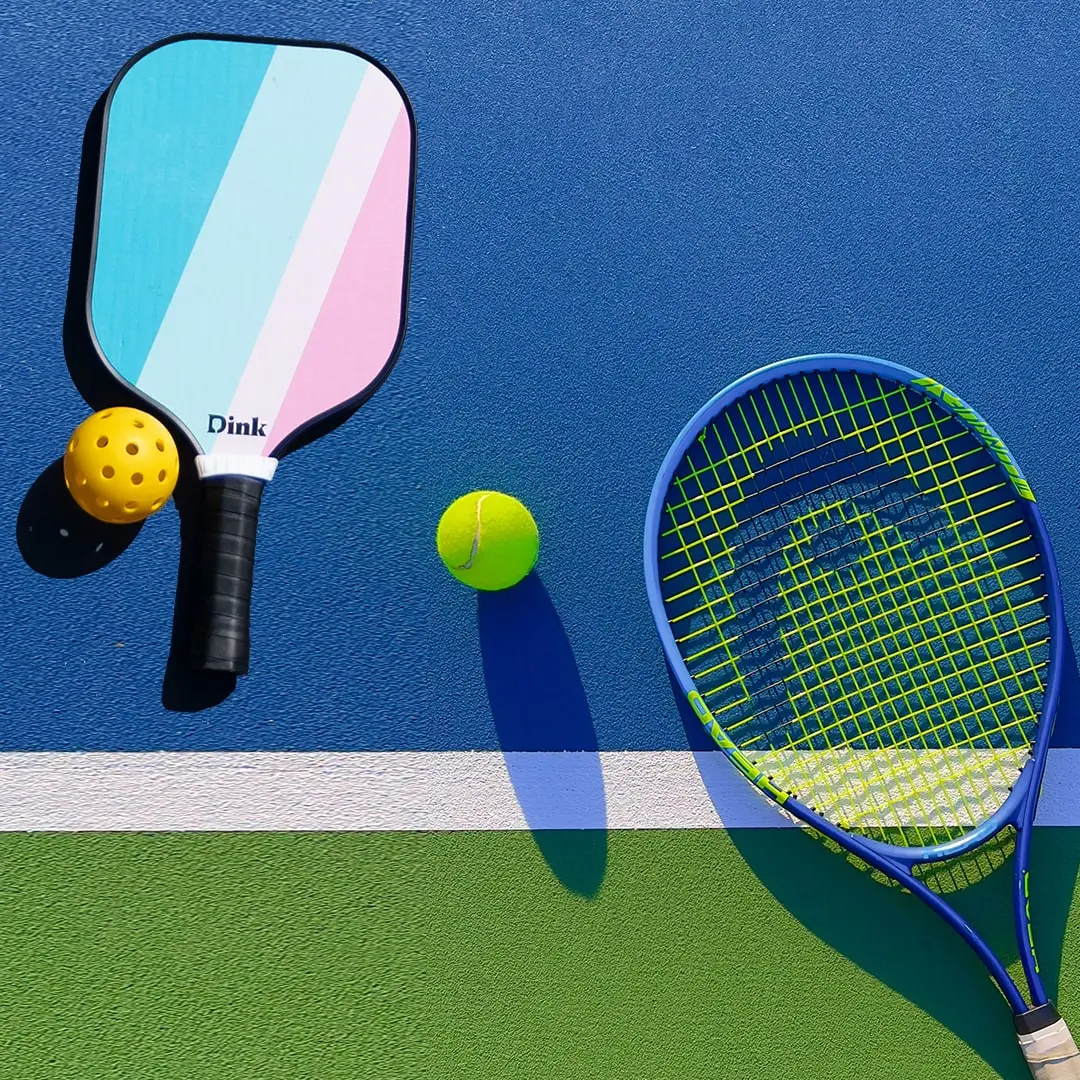
Pickleball and tennis, while both racquet sports require distinct equipment tailored to their unique gameplay styles. In pickleball, players use paddles made from materials such as composite, fiberglass, carbon fiber, and graphite, which are significantly smaller and lighter than tennis racquets. These paddles are designed to provide quick maneuverability and control and are suitable for pickleball's fast-paced, net-focused action. The ball used in pickleball is a perforated plastic ball, resembling a whiffle ball, which travels slower and requires less force to hit compared to a tennis ball.
In contrast, tennis racquets are larger and heavier, typically strung with nylon or polyester strings to handle the powerful strokes and high-speed serves characteristic of tennis. The tennis ball is a solid rubber ball covered with felt, designed to endure intense impact and bounce on the court. The differences in ball composition between the two sports also influence gameplay; the pickleball's lightweight and unique bounce requires precise control, while the tennis ball demands more power and endurance from players.
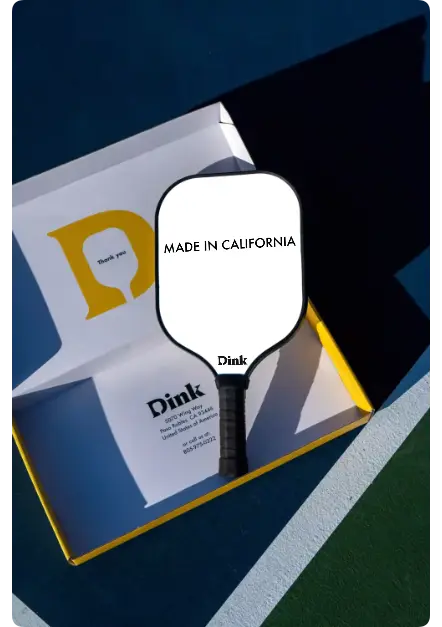
Design a Custom Pickleball Paddle to Make the Game More Enjoyable
Starting from $59.99/each
Differences in Rules and Scoring
In pickleball, the game is typically played to 11 points, and a player must win by at least two points. Only the serving side can score points, and the serve is executed underhand, with the paddle contacting the ball below the waist. The serve must land in the diagonally opposite service court, and the ball must bounce once on each side before players can volley.
Tennis uses a more complex scoring system involving points, games, and sets. Players must win four points to take a game, which is scored as 15, 30, 40, and game points. A player must win at least six games to win a set, leading by at least two. Matches are typically best of three or five sets. Tennis serves are overhand, and the ball does not need to bounce before being returned.
Faults and let serves also differ between the sports. In tennis, a fault occurs if the serve does not land in the correct service box, and a let serve can be retaken if the ball touches the net but lands correctly. Pickleball has similar faults for serves but does not allow for let serves; instead, it results in a point for the opponent.
Finally, the double-bounce rule in pickleball, which requires the ball to bounce once on each side after the serve before volleys are allowed, adds a strategic layer that doesn’t present in tennis.
Pickleball and Tennis Gameplay and Strategy
Both sports require strategic thinking and the ability to adapt to opponents' playing styles, but the specific tactics and physical demands vary significantly. Pickleball's emphasis on placement and quick exchanges contrasts with tennis's focus on power and endurance, making each sport unique in its approach to gameplay and strategy.
Pickleball: Pickleball gameplay is characterized by its fast-paced nature and emphasis on precision and control rather than power. Players typically stand closer to the net, engaging in quick exchanges of volleys and "dinks" (soft shots) to outmaneuver their opponents. A key strategy in pickleball is the "third shot drop," where the third shot of a rally is softly placed into the non-volley zone (also known as the "kitchen") to force opponents to move forward and play defensively.
Tennis: Tennis gameplay often revolves around powerful serves, groundstrokes, and baseline rallies. Players use a combination of strength and precision to hit deep shots that push their opponents back, creating opportunities to move to the net and finish points with volleys or overheads. A common strategy is to control the baseline, using topspin and slice to dictate the pace and direction of the game.
Physical and Skill Requirements
Pickleball players need to be adept at short, rapid movements and have strong hand-eye coordination to effectively return the lightweight plastic ball. The game involves less running than tennis, making it less taxing on the legs and joints, which is why it's popular among older adults and those looking for a less physically demanding sport.
Due to the larger court size and longer rallies, tennis requires significant stamina and endurance. Players must cover longer distances, often sprinting from one side of the court to another. This sport demands powerful serves, precise strokes, and the ability to maintain long baseline rallies. Tennis players also need strength and conditioning to consistently hit the heavier felt-covered ball with force.
Health and Social Benefits
Both pickleball and tennis offer significant health and social benefits, making them popular choices for people looking to stay active and socially engaged. In terms of health, both sports provide excellent cardiovascular workouts, enhancing heart health and overall endurance. With its larger court and longer rallies, tennis typically involves more running and can burn more calories. A one-hour game of tennis can burn between 400–600 calories, depending on the intensity of play. Being less strenuous but still demanding quick reflexes and agility, pickleball can burn around 300–450 calories per hour.
Physically, pickleball is a lower-impact sport, making it accessible for older adults or those with joint issues. The smaller court size reduces the amount of running, focusing more on quick movements and hand-eye coordination. This can help improve balance, coordination, and reaction times. Conversely, tennis involves more extensive running, jumping, and lateral movements, which build strength, flexibility, and stamina.
Socially, both sports are highly engaging and often played in doubles, fostering teamwork and communication. Pickleball, in particular, is known for its inclusive community and social atmosphere. It is often played in group settings with a friendly, recreational focus. Tennis clubs and leagues also provide ample opportunities for social interaction, from casual games to competitive tournaments.
Both sports encourage regular participation, leading to long-term friendships and a supportive community. Whether through the camaraderie of a local pickleball group or the competitive spirit of a tennis club, players often form strong social bonds.
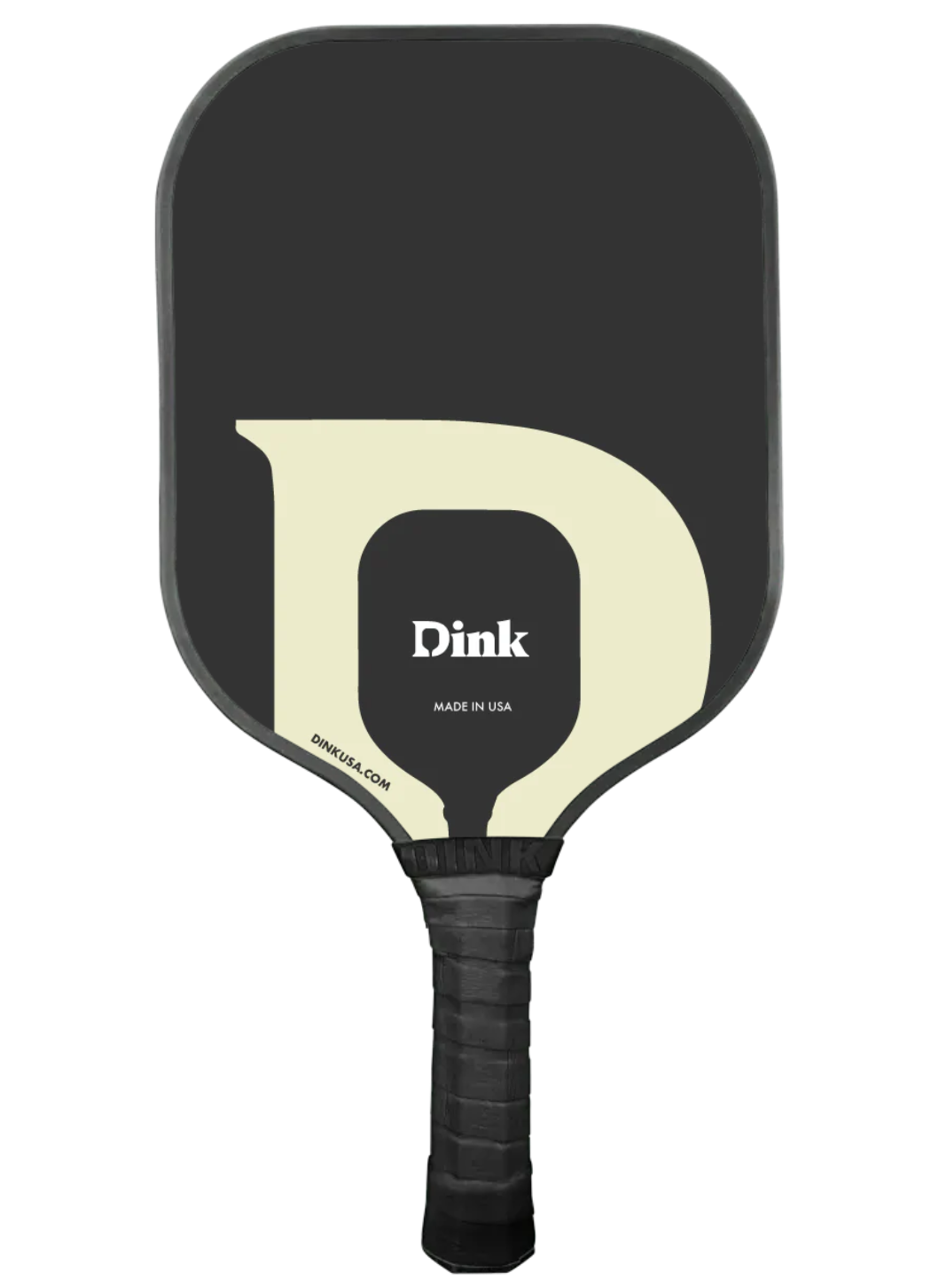
Make It Yours: Personalize One of Our Pickleball Paddle Designs
Starting from $59.99
Meet the Expert

Mike Hardy
Hey, I’m Mike Hardy, founder of Dink. I’ve spent years learning everything there is to know about what makes a paddle play great, and I personally test every single one we make (sometimes until they break) to make sure they’re up to the challenge. So, in my articles, I want to share my knowledge with you to help you find the perfect pickleball equipment for you.