Pickleball Terms and Phrases: A Full Glossary
Check pickleball terms and phrases that players must learn to fully understand and enjoy the game.
Knowing the language of pickleball is essential for improving your skills and communicating effectively on the court. From basic court positions to advanced shot techniques, each term helps describe a specific aspect of play.
In this detailed glossary, we’ll break down the key terms and phrases you’ll encounter in pickleball, providing clear definitions and explanations. Understanding these terms not only enhances your gameplay but also deepens your appreciation for the strategies and nuances of the sport.
Basic Pickleball Court Terminology
Court
A pickleball court is rectangular and measures 20 feet wide by 44 feet long, similar in size to a doubles badminton court. It is divided into two halves by a net that stands 36 inches at the sidelines and 34 inches in the center.
Each side of the court has a non-volley zone (also known as the kitchen) near the net. There are also right and left service courts, which are used for serving and play. The court is designed for both singles and doubles play.
Baseline
The baseline is the line at the back of the court, running parallel to the net. It marks the boundary for the playable area at the rear of the court. During serves, the player must stand behind the baseline until the ball is hit. If a player steps on or over the baseline while serving, it results in a fault.
Non-Volley Zone (Kitchen)
The non-volley zone, commonly called the "kitchen," is the area that extends 7 feet from the net on both sides of the court. Players cannot hit the ball in the air (volley) while standing inside the kitchen or on the kitchen line.
However, they can step into the kitchen to hit a ball that has bounced. This rule prevents players from dominating play by volleying too close to the net, encouraging strategic and controlled gameplay. Stepping into the kitchen during a volley results in a fault.
Pickleball Serving and Scoring Terms
Serve
In pickleball, the serve is the first shot that starts a rally. The serve must be hit underhand with the paddle making contact below the waist, and the ball must land in the opponent’s service area diagonally across the net.
The server stands behind the baseline and must keep one foot behind it during the serve. The serve cannot land in the non-volley zone (kitchen) or on the non-volley line, and only one serve attempt is allowed unless a "let" occurs.
Fault
A fault in pickleball is any action that results in the loss of a rally or point.
Side Out
A side-out happens when the serving team loses the right to serve, and the opposing team gains control of the serve. In doubles play, both players on a team get the opportunity to serve before a side-out is called.
The serving order rotates between players, and when a side out occurs, the opposing team takes over serving with the player on the right side of the court starting the next serve.
Rally Scoring vs. Traditional Scoring
Traditional Scoring: In traditional pickleball scoring, only the serving team can score points. If the serving team wins a rally, they score a point. If the receiving team wins the rally, they don’t score, but they get the chance to serve after a side out. Games are typically played to 11 points, and a team must win by 2 points.
Rally Scoring: In rally scoring, a point is awarded after every rally, regardless of which team served. This method speeds up the game and ensures continuous scoring. Rally scoring is less common in an official pickleball game but is sometimes used in casual or timed matches.
Pickleball Gameplay Terms
Dink
A dink is a soft, controlled shot that lands just over the net, typically in the opponent's non-volley zone (the "kitchen"). It slows down the pace of the game and forces the opponent to hit upwards, which limits their offensive options.
Players use a dink during rallies to move the opponent closer to the net and create opportunities for a more offensive shot. Dinks are especially common in strategic, slower-paced play.
Volley
A volley in pickleball is when a player strikes the ball out of the air before it bounces on the court. This can be a quick, aggressive shot often used at the net. Volleying is key to maintaining pressure on your opponent, as it cuts down on their reaction time. It’s often used in doubles play to dominate the net and control the point.
Drop Shot
A drop shot is a soft, gentle hit that just clears the net and lands in the non-volley zone, usually catching opponents off guard when they are further back in the court. It is executed with a soft touch and minimal power, often as a follow-up to a deeper shot, aiming to pull the opponent forward into an uncomfortable position near the net.
Lob
A lob is a high, arcing shot that travels over the heads of opponents and lands deep near the baseline. It forces opponents to retreat and reposition. It is effective when opponents are positioned close to the net, forcing them to move back and defend from a weaker position. It’s also used defensively to reset a rally or escape pressure.
Drive
A drive is a fast, powerful shot hit with a flatter trajectory compared to a lob or drop shot. The aim is to generate pace and push the opponent back or catch them off balance. Drives are used to apply pressure on the opponent, often in the early stages of a rally, especially after a serve or return. A well-executed drive can result in a quick point or force a weak return.
Groundstroke
A groundstroke is a shot hit after the ball has bounced on the court, typically struck from the baseline or mid-court. Unlike a volley, which is hit in the air before the ball bounces, a groundstroke requires the player to wait for it to bounce before hitting it. Groundstrokes are usually more controlled and allow for better placement and spin, while volleys are more aggressive and reactive.
Strategy and Positioning Terms
Poaching
Poaching in pickleball refers to when one player, typically in a doubles match, crosses over to their partner's side of the court to intercept and hit a shot. This is often done to take advantage of an opportunity to hit an aggressive shot or finish a point.
Poaching requires good timing, communication, and understanding between partners. Players typically poach when they anticipate a weak return from the opponent, allowing them to seize control of the point.
Stacking
This strategy is used in doubles pickleball to keep players on their preferred side of the court (forehand or backhand). When stacking, both players begin on one side of the court before the serve, and after the serve or return, they quickly switch sides to get into their preferred positions.
Stacking is commonly used to maintain advantageous positioning, especially if one player has a stronger forehand or backhand, or to create strategic advantages based on their strengths.
Transition Zone
The transition zone is the area on the pickleball court between the baseline and the non-volley zone (or kitchen). This space is also called "no man's land" because it is a tricky area to play in. Players in the transition zone are more vulnerable to fast-paced shots, and the risk of being caught off guard is higher. Mastering movement through the transition zone is crucial to maintaining control and advancing to the net, where players can be more aggressive.
Third Shot Drop
This is one of the most important shots in pickleball strategy. It occurs after the serve and return (i.e., the third shot), and the goal is to hit a soft, controlled shot that drops into the non-volley zone (kitchen), forcing opponents to hit upward and preventing them from attacking.
This shot allows the serving team to transition to the net and neutralize any advantage the receiving team has. It’s considered a key tactic for gaining control of the point and leveling the playing field.
Pickleball Paddle Terms
Pickleball Paddle Face
The pickleball paddle face refers to the paddle's hitting surface, where the ball makes contact. The face's texture and material can influence ball control, spin, and power.
Core
The core is the inner material of the pickleball paddle between the two faces. It is usually made of composite, carbon fiber, or fiberglass.
Grip
The grip is the handle portion of the paddle that the player holds. It can vary in size, texture, and material. A comfortable pickleball paddle grip with the right size and tackiness is essential for maintaining control and preventing slipping during play. Players can customize grips with overgrips to adjust thickness or improve comfort.
Edge Guard
The edge guard is a protective strip around the paddle's edge, designed to prevent damage from accidental impacts with the ground, court, or other objects. It protects the core and face from chips and dents. Some paddles have edgeless designs for a smoother surface, though these offer less protection.
Buy a Pickleball Paddle Cover to Protect Your Gear
$9.99
Shape
Shape refers to the overall dimensions and design of the paddle. Common paddle shapes are standard, elongated and wide body.
Balance
The balance of a pickleball paddle refers to how the weight is distributed.
Surface Texture
Surface texture refers to how rough or smooth the paddle face is. A textured paddle face enhances the ability to generate spin, allowing players to impart more control on the ball. A smoother paddle may offer less spin potential but could provide a quicker ball response off the paddle.
Sweet Spot
The sweet spot is the area on the paddle face that offers the best control and power when the ball is struck. Hitting the ball in the sweet spot provides more consistent and accurate shots, while hitting outside of it can result in less control and power. Paddles with a larger sweet spot are generally easier to use, especially for beginners.
Deflection
Deflection refers to how much the paddle surface compresses or bends when the ball hits it. Paddles with higher deflection allow for more power and bounce, while those with lower deflection provide more control and consistency. The amount of deflection can influence the "feel" of the paddle during play.
USAP Approved and Not Approved
USAP approved means that a paddle has been tested and certified by the USA Pickleball Association (USAPA) for use in sanctioned tournaments. To be approved, paddles must meet specific criteria for size, weight, materials, surface roughness, and deflection.
Not-approved paddles may not meet these standards and are often used for recreational play, but they cannot be used in official USAP tournaments.
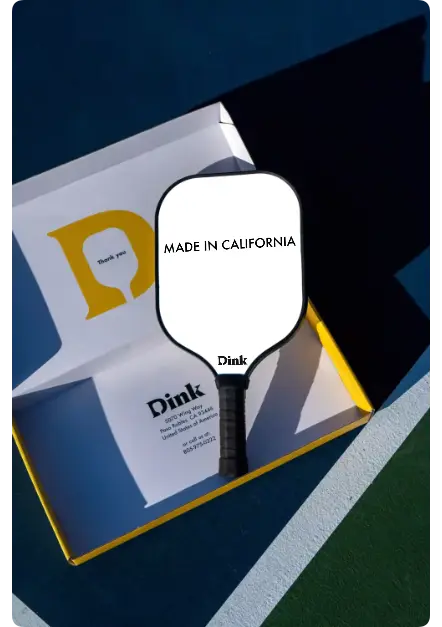
Design a Custom Pickleball Paddle to Make the Game More Enjoyable
Starting from $59.99/each
Types of Pickleball Players and Shots
Banger
A "banger" is a pickleball player who relies on powerful, hard-hitting shots to overpower opponents. They often hit the ball with maximum force, especially from the baseline, attempting to win points through sheer speed and strength.
Pusher
A "pusher" is a player who focuses on consistent, safe returns rather than aggressive shots. They avoid making mistakes and force opponents to generate their own pace, hoping for errors.
Finesse Player
A "finesse player" uses skillful, well-placed shots rather than power to win points. They focus on precision, control, and strategy, making use of angles, soft shots, and dinks.
Pickleball Etiquette Terms
Paddle Tap
A paddle tap is a simple but meaningful gesture in pickleball, symbolizing good sportsmanship and mutual respect between players. After a match, players tap their paddles together, much like a handshake in other sports.
This gesture acknowledges a well-played game, regardless of the outcome, and fosters a sense of camaraderie and fairness. It’s a way of saying "good game" and celebrating the spirit of competition while maintaining positive relationships on the court.
Call Your Own Lines
In pickleball, "call your own lines" refers to the practice of players being responsible for making their own line calls during a match. Since pickleball often lacks referees or officials, players are expected to judge whether the ball lands in or out on their side of the court.
This approach relies on honesty, integrity, and fairness to ensure the game is played with respect for the pickleball rules. Fair and accurate line calls are essential to maintaining the competitive spirit and trust between opponents.
Advanced and Slang Terms
Erne
An Erne is an advanced pickleball technique where players position themselves outside the court, near the net, and strike the ball while avoiding the non-volley zone (kitchen). This allows the player to hit the ball closer to the net, often surprising the opponent with a sharp angle or quick response.
ATP (Around the Post)
An ATP, or Around the Post shot, occurs when a player hits the ball outside the net post (without the ball passing over the net). This shot can be made when the ball is hit wide enough, allowing the player to return it by curving it around the net post and landing it back in the opponent's court.
Foot Fault
A foot fault occurs when a player’s foot crosses or touches the baseline, sidelines, or non-volley zone (kitchen) line during specific moments in the game, such as serving or while volleying near the kitchen. The most common type of foot fault happens when a player steps into the kitchen during a volley, which is illegal.
Spin Serve
A spin serve is when a player imparts spin on the ball while serving, causing it to behave unpredictably in the air or upon bouncing. There are several ways to create spin, such as using wrist action or flicking the paddle, which can result in topspin, backspin, or sidespin.
Meet the Expert

Mike Hardy
Hey, I’m Mike Hardy, founder of Dink. I’ve spent years learning everything there is to know about what makes a paddle play great, and I personally test every single one we make (sometimes until they break) to make sure they’re up to the challenge. So, in my articles, I want to share my knowledge with you to help you find the perfect pickleball equipment for you.